
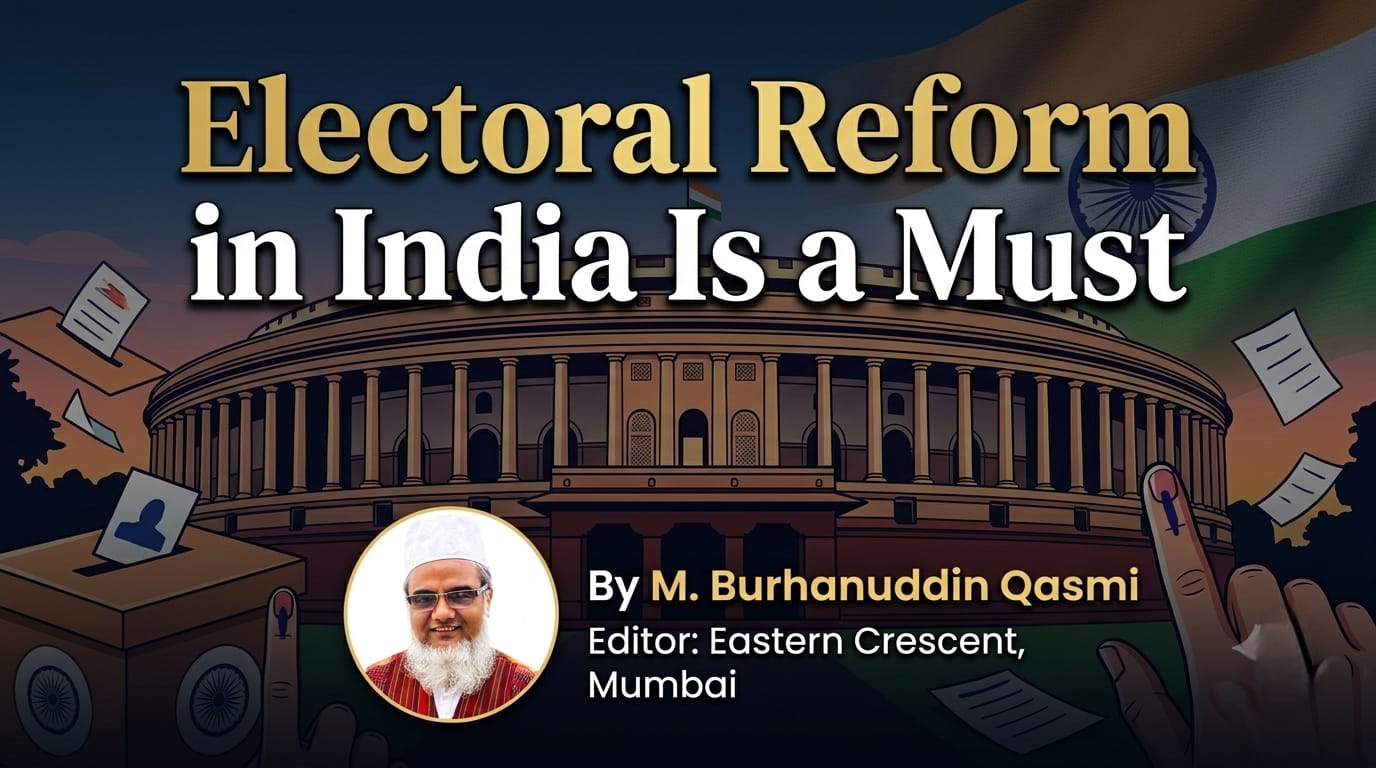
Electoral Reform in India Is a Must

Electoral Reform in India Is a Must
By: M. Burhanuddin Qasmi
Editor: Eastern Crescent, Mumbai
SIR and delimitation appear to have been among the main factors behind the BJP’s electoral gains in West Bengal and Assam. However, the functioning of the present Election Commission of India (ECI) has raised serious doubts about the fairness and credibility of India’s electoral process.
In the ongoing SIR exercise in Maharashtra and Jharkhand—and in the next phase covering Telangana and other states—the West Bengal model appears to be reflected in the process. Even simple spelling variations in names, including minor differences from previous electoral rolls, are becoming grounds for objections and, in some cases, the potential deletion of names from the voter registry.
This is particularly concerning when such discrepancies may themselves have resulted from administrative errors or inconsistencies in the preparation and maintenance of electoral rolls by the ECI itself.
The right to participate in elections is a fundamental pillar of democracy. Mere spelling mistakes or minor discrepancies in electoral records—particularly where they do not evidence ineligibility—should not, by themselves, result in the exclusion of genuine voters. Interestingly, the ECI’s own voter-service portal acknowledges that spelling variations may exist between previous and current SIR records, advising voters to try different name variations while searching the rolls.

Moreover, the pattern of SIR in West Bengal and Assam, alongside subsequent procedures and reports of harassment, has raised concerns among sections of the public and political observers about whether the process could disproportionately affect particular communities or groups of Indians. Such concerns deserve transparent, independent, and impartial scrutiny rather than dismissal.
Opposition parties have consistently raised these issues in political forums, but their concerns have frequently been met with little meaningful response by the BJP-led government in the Centre. The recent call by CJP for the resignation of Chief Election Commissioner Gyanesh Kumar is another expression of the growing public anger surrounding the ECI and the SIR exercise.
Recent political and public reactions also demonstrate how deeply electoral-roll revision has become intertwined with questions of democratic representation. Whatever one’s political affiliation, the basic principle should remain the same: an eligible Indian citizen should not lose the right to vote because of an administrative error, while genuinely ineligible entries must be addressed through a transparent and legally established procedure. The credibility of the entire exercise depends upon maintaining this balance.
Indian youth cannot simply stand at the sidelines as mere spectators while their democratic rights, constitutional values, and the very idea of India are put at risk. It is time for all sections of society to come together and build a genuine, sustained movement for electoral reform in India before it becomes too late to repair the damage.

The resignation of the present Chief Election Commissioner, though it may be considered by some as a necessary first step, cannot by itself address the deeper structural problem. India needs comprehensive and credible electoral reforms, including greater transparency in electoral-roll revision, a fair and transparent process for the delimitation of parliamentary and Assembly constituencies, stronger safeguards against the wrongful deletion of voters, effective grievance-redress mechanisms, and meaningful institutional accountability.
The integrity of the electoral process is not merely a matter of party politics; it is fundamental to protecting the very pillars of Indian democracy. The present BJP government is unlikely to easily accept demands for far-reaching electoral reforms. Nonetheless, Indians across political affiliations, along with civil-society groups, must remain vigilant and stand together to protect democracy and ensure free, fair, and credible elections before it is too late to fix what may otherwise become increasingly difficult to repair.
You May Also Like
 Editorial
The Protest and Arrests in Delhi
The Protest and Arrests in Delhi By: M. Burhanuddin Qasmi Editor: Eastern Crescent, Mumbai...
 Editorial
Azerbaijan’s Aliyev Is Digging His Own Political Grave
Azerbaijan’s Aliyev Is Digging His Own Political Grave By: M. Burhanuddin Qasmi Editor: Eastern...
 Editorial
Why Should Common Citizens of India Lose Rights for Mistakes Committed by the ECI?
Why Should Common Citizens of India Lose Rights for Mistakes Committed by the ECI?...
 Editorial
July 2026: The Month When the Collapse of Indian Television News Became Impossible to Deny
July 2026: The Month When the Collapse of Indian Television News Became Impossible to...
 Editorial
The First Major Success of the Cockroach Movement
The First Major Success of the Cockroach Movement By: M. Burhanuddin Qasmi Editor: Eastern...
 Editorial
Some Are Happy for Spain's World Cup Victory, Others for Argentina's Defeat
Some Are Happy for Spain's World Cup Victory, Others for Argentina's Defeat By: M....
Comments (0)
Leave a Comment