

The First Major Success of the Cockroach Movement

The First Major Success of the Cockroach Movement
By: M. Burhanuddin Qasmi
Editor: Eastern Crescent, Mumbai
The Cockroach Janta Party (CJP) has today achieved the first major political success of its struggle. This success is not merely the result of the perseverance and resilience of the students and young people standing in the frontlines of the protest; it is also a clear demonstration that organized, peaceful, and sustained public movements can ultimately compel those in power to reconsider their decisions.
Every student, young participant, and their family members who have stood with this movement deserve heartfelt congratulations. It must always be remembered that those who take part in protests have homes, parents, and loved ones who remain anxious about their safety every moment. It is easy to sit with a mobile phone and post emotional comments on social media or WhatsApp, but only those who stand in the streets—and their families—truly understand the pressures, arrests, intimidation, and other risks that governments can employ during such movements.
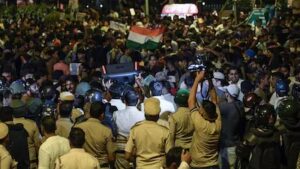
It is equally important to understand that no popular movement reaches all of its objectives in a single phase. Significant achievements are always attained step by step. Therefore, if some protest leaders have temporarily ended their hunger strike or if the government has accepted a number of the movement’s principal demands, questioning their sincerity, commitment, or intentions on that basis would not only be unfair but would also amount to disregarding the sacrifices they have made for this cause.
Today’s resignation of Education Minister Dardmand Pradhan on 25 July 2026 appears to be a direct consequence of sustained public pressure. At the same time, it would be unrealistic to ignore the possibility that the government may use this resignation as an opportunity to reduce the intensity of the protests and create divisions within the movement. Since three of the movement’s major demands appear to have been accepted, tomorrow’s proposed nationwide demonstrations may lose some of their momentum, giving the government greater political room to manage the situation.

Had this resignation not taken place today, it was highly likely that events would have taken a far more serious turn after Sunday. At that stage, the resignation of a single minister would probably not have been enough. Instead, the crisis could have evolved into a direct challenge to the Prime Minister’s political credibility and leadership. It appears that the government has chosen to swallow a bitter but necessary pill in an effort to contain immediate political damage.
The government’s foremost strategy from this point onward will almost certainly be to break the momentum of the movement, create differences among protesting students, and place prominent leaders under various forms of pressure. In this context, well-known figures such as “Junaid”, along with several other active organisers, may face increased surveillance or official pressure in the coming days. The movement must be mentally prepared for such possibilities.

On the other hand, the leadership of the CJP now carries an equally heavy responsibility. It must not only preserve the movement’s unity and momentum but also make the safety and security of participating students and young people its highest priority. Furthermore, the leadership should strive to secure clear, written, and enforceable assurances regarding the implementation of its five-point charter so that these commitments cannot later be ignored. Otherwise, there is a real risk that the same leaders may eventually be targeted, discredited, or isolated, diminishing the significance of the sacrifices made during this struggle.
In my opinion, this resignation does not represent the government’s complete defeat. Rather, it is a calculated attempt to shield itself from a much larger political crisis, and it is possible that the government may succeed in doing so. Nevertheless, one fact cannot be denied: the protest has already achieved its first major milestone. It has shattered the widespread belief that organized public pressure cannot bring about change. The government’s recent response itself indicates that it has been compelled to take public discontent and student unity seriously.

The future success of this movement will now depend on whether it remains confined to the leadership of a few individuals or evolves into a genuinely collective movement guided by consultation, shared wisdom, and broad participation from the student community. If decision-making continues to rest with only a handful of representatives, there is a real possibility that within a few months the situation may return to where it began. However, if collective leadership, unity, and perseverance are maintained, this first success could become the foundation for a far more significant and lasting transformation.
You May Also Like
 Editorial
The Protest and Arrests in Delhi
The Protest and Arrests in Delhi By: M. Burhanuddin Qasmi Editor: Eastern Crescent, Mumbai...
 Editorial
Azerbaijan’s Aliyev Is Digging His Own Political Grave
Azerbaijan’s Aliyev Is Digging His Own Political Grave By: M. Burhanuddin Qasmi Editor: Eastern...
 Editorial
Why Should Common Citizens of India Lose Rights for Mistakes Committed by the ECI?
Why Should Common Citizens of India Lose Rights for Mistakes Committed by the ECI?...
 Editorial
Electoral Reform in India Is a Must
Electoral Reform in India Is a Must By: M. Burhanuddin Qasmi Editor: Eastern Crescent,...
 Editorial
July 2026: The Month When the Collapse of Indian Television News Became Impossible to Deny
July 2026: The Month When the Collapse of Indian Television News Became Impossible to...
 Editorial
Some Are Happy for Spain's World Cup Victory, Others for Argentina's Defeat
Some Are Happy for Spain's World Cup Victory, Others for Argentina's Defeat By: M....
Comments (0)
Leave a Comment