
Reforming Muslim Society in India: A Call for Introspection and Renewal

Reforming Muslim Society in India: A Call for Introspection and Renewal
By: S. Masood Husain
More than seven decades after Independence, an uncomfortable but necessary question needs to be asked: Has Indian Muslim society reformed itself sufficiently to meet the challenges of contemporary India?
The answer cannot simply be “no”. Indian Muslims have made substantial progress since 1947. Millions have benefited from modern education and have distinguished themselves in medicine, engineering, science, administration, business, the armed forces, literature and public life. Muslim women, too, have made significant advances in education and professional careers.
Yet there is another reality that cannot be ignored. In sections of the community, educational, economic and social backwardness remains significant. The Sachar Committee, established by the Government of India in 2005, documented substantial disadvantages faced by Muslims in education, employment and access to economic opportunities. Its recommendations included better educational access, skill development, credit, infrastructure and improved utilisation of waqf resources.
The real question, therefore, is not whether Muslims have changed, but whether the pace and depth of change have been adequate.
Reform Does Not Mean Abandoning Islam
Muslim reform is sometimes presented as a choice between Islam and modernity. This is a false choice.
Islam places a high value on knowledge, justice, human dignity, consultation, responsibility and social welfare. Islamic civilisation itself produced outstanding achievements in mathematics, medicine, astronomy, philosophy and other fields.
The task before Indian Muslims is consequently not to become “less Muslim”, but to become better educated, more intellectually confident, economically productive and socially responsible Muslims.
There is also a need to distinguish between Islam and historically inherited customs. Not every practice found in a Muslim society is necessarily an essential requirement of Islam. Social practices can be examined, modified and improved in the light of Islamic principles and changing circumstances.
Education Must Become the First Priority
The most important reform is education. The community needs to move beyond the old debate between religious and modern education. The appropriate goal should be:
Islamic literacy + modern education + scientific temper + professional competence.
Muslim children need strong foundations in mathematics, science, technology, languages, computers, economics and social sciences. Higher education and professional training must receive much greater attention.

Madrasas have an important role in preserving Islamic learning, but where appropriate their curricula can be supplemented with contemporary subjects. Equally important is the development of critical thinking. Young Muslims should learn not merely what to think, but how to think, question, investigate and distinguish evidence from misinformation.
The Sachar Committee’s educational recommendations—such as improving access to quality education, scholarships, schools in underserved areas and modernisation of madrasas—remain relevant to the broader reform discussion.
Reform of Religious Scholarship
Religious scholarship also needs renewal. The traditional “ulama” have an indispensable role in preserving Islamic knowledge. But contemporary Muslims face questions involving science, technology, economics, psychology, constitutional law, gender relations, democracy and globalisation.
A modern “alim” therefore needs familiarity with the contemporary world. Greater dialogue between traditional Islamic scholarship and modern intellectual disciplines would enable religious scholars to address the questions that young Muslims actually face.
Religious leadership should increasingly emphasise education, character, family stability, economic self-reliance, social justice and civic responsibility rather than allowing community discourse to become dominated by internal disputes over secondary matters.
Women Are Central to Community Reform
No Muslim social reform programme can succeed without giving the highest priority to women.
Girls must receive the same commitment to quality education as boys. Muslim women should have opportunities for higher education, professional careers, entrepreneurship and participation in community institutions.
This does not require weakening the family. On the contrary, the objective should be to create educated, stable and mutually respectful Muslim families in which men and women share responsibility.
The community should also examine practices surrounding marriage. Excessive expenditure, dowry demands, social competition and unrealistic expectations place unnecessary burdens on families. Simple marriages and responsible family life should be encouraged.
Economic Empowerment Is Essential
Education without economic opportunity cannot produce complete social transformation. Muslims need a stronger culture of entrepreneurship, professional excellence, skill development and wealth creation. Young people should be encouraged to enter technology, manufacturing, professional services, modern agriculture, business and emerging industries.
Greater financial literacy is also necessary. Families should understand savings, investment, insurance, taxation, pensions and responsible borrowing.
Community institutions can play an important role by creating scholarship programmes, career guidance centres, entrepreneurship networks and skill-development initiatives.
Reform Muslim Institutions
Community institutions themselves require reform. Mosques, madrasas, charitable organisations and other institutions perform valuable functions, but some suffer from factionalism, personality-based leadership, inadequate professional management and insufficient transparency.
The Islamic principle of “shura”—consultation— provides a valuable foundation for institutional renewal.
Community organisations should have transparent constitutions, audited accounts, defined responsibilities and mechanisms for accountability. Young people, women and competent professionals should be given greater opportunities to participate.
Leadership should increasingly be based upon competence, integrity and service, rather than merely age, family background or organisational influence.
Waqf: From Property to Social Capital
Waqf has enormous potential to contribute to Muslim social development. Historically, waqf institutions supported education, healthcare and public welfare. Properly managed waqf assets in India could support schools, scholarships, hospitals, vocational institutions, research centres and programmes for the poor.
This requires professional management, accurate records, transparency and protection from encroachment and misuse.
The objective should be to transform waqf from largely passive property ownership into productive social capital.
A New Political Approach
Muslim political thinking also needs renewal. Muslims should not see themselves merely as a “vote bank”. They should participate in Indian democracy as equal constitutional citizens.
Education, employment, healthcare, economic development, rule of law, security, infrastructure, minority rights and social justice should form the basis of political engagement.

Political parties should be judged by their policies and performance, not simply by their religious identity.
At the same time, constitutional protection against discrimination and protection of legitimate minority rights must remain important concerns.
Civic Responsibility and National Integration
A strong Muslim identity and strong Indian citizenship are not contradictory. A good Muslim should also be an exemplary citizen—respecting the law, public property, the environment and the rights of others. Muslims should participate actively in local civic institutions and community service.
Integration should not mean assimilation. Muslims need not surrender their religious or cultural identity in order to participate fully in Indian national life. The ideal should be integration with dignity.
Building Bridges with Other Communities
Social harmony is a two-way responsibility. Muslims need greater interaction with Hindus, Sikhs, Christians, Buddhists, Jains and others. Interfaith engagement should move beyond occasional formal meetings and lead to practical cooperation in education, healthcare, poverty reduction, environmental protection and community service.
Children should learn about India’s different religious traditions with knowledge and respect.
But the wider Indian society also has responsibilities. Communal prejudice, discrimination, hate speech, misinformation and stereotyping cannot be ignored. It would be unfair to attribute social disharmony exclusively to Muslim shortcomings. Muslim reform and the creation of a harmonious India must therefore proceed simultaneously.
From Isolation to Intellectual Confidence
Muslim society needs neither blind traditionalism nor blind imitation of Western modernity. A constructive approach would combine:
Islamic ethical values + modern education + scientific temper + constitutional democracy + Indian pluralism.
Young Muslims should be confident enough to engage with different ideas without feeling that every unfamiliar idea threatens their faith. This requires an intellectual culture in which questioning is not automatically equated with disbelief and disagreement does not become hostility.
Reform Must Come From Within
Perhaps the most important principle is that sustainable reform must have substantial roots within the community. Reform imposed from outside is likely to be perceived as an attack on identity. Reform articulated by respected Muslim scholars, intellectuals, professionals, women and young people has a greater chance of acceptance.
At the same time, internal reform should not mean isolation. Muslims can learn from the experiences of other Indian communities and from successful educational, economic and institutional models around the world.
The question should be:
What do Islamic values require from us under the conditions in which we actually live today?
That question could become the starting point of a constructive Muslim reform movement.
Towards a New Social Reform Agenda
The time may be appropriate for Muslim intellectuals and community organisations to formulate a broad Muslim Social Reform Charter for Contemporary India.
Its priorities could include:
– universal access to quality education;
– strengthening modern and religious scholarship;
– equal educational opportunities for girls;
– reform of marriage and family practices;
– entrepreneurship and economic empowerment;
– professional and transparent community institutions;
– productive utilisation of waqf;
– responsible constitutional political participation;
– stronger civic engagement;
– interfaith dialogue and social harmony.
Such a programme should not remain a declaration of good intentions. Each objective needs responsible institutions, measurable targets, professional management and periodic evaluation.
The Larger National Interest
Muslim reform is not merely an internal Muslim question. It has significance for Indian society as a whole. An educated, economically strong, socially confident and institutionally progressive Muslim community will be better equipped to contribute to India’s development. At the same time, a Muslim community that feels respected and included is more likely to participate confidently in the national mainstream.
But the responsibility must remain reciprocal. Muslims must honestly confront weaknesses within their own society, while the State and wider society must uphold equality, dignity, constitutional rights and freedom from discrimination.
Conclusion
It is neither fair nor useful to say that Indian Muslims have failed to reform themselves since Independence. They have changed considerably, and millions have achieved remarkable success. But it is equally important not to use these achievements to avoid difficult questions.
The community needs a new phase of reform—one that places education, women’s empowerment, economic development, institutional accountability, scientific thinking and civic responsibility at its centre.
The goal should not be assimilation and certainly not isolation. It should be integration with dignity.
Indian Muslims can preserve their religious identity while becoming modern in education, scientific in outlook, democratic in political conduct, progressive in social institutions and fully committed to the common good.
The real challenge is therefore not whether Muslims should choose between Islam and modernity. It is whether they can draw upon the best ethical and intellectual resources of Islam to meet the challenges of modern India.
That is the reform agenda that deserves serious discussion, not merely among Muslims, but in the larger interest of a harmonious, democratic and pluralistic India.
(The author Syed Masood Husain is an alumnus of Aligarh Muslim University and IIT, Delhi, and former Chairman, Central Water Commission, Ministry of Water Resources, Government of India)
You May Also Like
 Culture
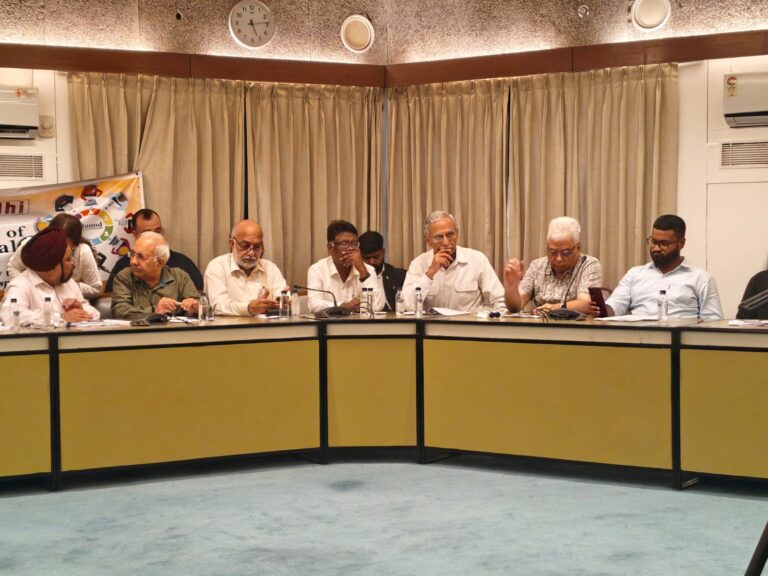
Redefining Muslim Leadership in Contemporary India-A Framework of Inclusive Community Governance
Redefining Muslim Leadership in Contemporary India-A Framework of Inclusive Community Governance By: S. Masood...
 Culture
How to Combat Hate Speech and Hate Crime in India
How to Combat Hate Speech and Hate Crime in India By: S. Masood Husain...
 Culture
A Child Reflects the Home He Grows In
A Child Reflects the Home He Grows In By: Mohammad Taukir Rahmani Subeditor: Eastern...
 Culture
The Responsibility of Imamate and the Exemption of Women: A Practical and Social Wisdom
The Responsibility of Imamate and the Exemption of Women: A Practical and Social Wisdom...
 Culture
The Flood of Heresy: A Manifestation of Ideological Colonialism and a Trial for Islamic Consciousness
The Flood of Heresy: A Manifestation of Ideological Colonialism and a Trial for Islamic...
 Culture
Meaning of Love for the Prophet Muhammad (SAWS)
Meaning of Love for the Prophet Muhammad (SAWS) By: Khursheed Alam Dawood Qasmi Moon...
Comments (0)
Leave a Comment