

Reading: A Public and Religious Duty

Reading: A Public and Religious Duty
By: Mohammad Salman Alam
Assistant Teacher at MMERC Mumbai
Reading is considered as a fundamental and essential practice, deeply contributing to the personal and societal growth of individuals and communities alike from the very first day. From a public perspective, it serves as a tool for education and self-development. In the religious context, especially in the Islamic perspective, reading is not just encouraged but commanded by the Almighty Allah (swt). The very first divine revelation of the Glorious Qur’an begins with the word “Iqra” (Read), underscoring its great importance. By considering both the public and religious aspects of reading, we gain a deeper understanding of its profound significance in life.
In today’s rapidly growing world, reading is essential for personal and social progress. It fosters critical thinking, cultivates creativity, and empowers individuals to make informed decisions. A well-read society is an educated society, capable of contributing to justice, peace and humanity among the people.
However, reading strengthens democracy and social justice. It equips citizens with the knowledge to participate effectively in discussions, debates, and decisions that affect the collective well-being. When people read books, articles, and newspapers, they become more aware of global and local issues, cultural diversities, and social challenges. This awareness breeds empathy and understanding, which cause to developing of a balanced society.

From a religious viewpoint, particularly in Islam, reading is not only a means of gaining knowledge but also a kind of worship. The first command given to the Prophet Muhammad (saws) was about the reading. This divine instruction is a keystone to the importance of knowledge in Islam. Muslims are encouraged to seek knowledge from the cradle to the grave, and reading is one of the most effective ways to fulfill the religious duty in correct order.
The Qur’an, being a book of guidance, emphasizes the importance of understanding the nature and His creations through reading. Several verses in the Qur’an encourage believers to ponder the signs of Allah in the world, and in themselves. The act of reading does not boost only knowledge and wisdom but it causes spiritual gain and strengthens one’s connection with the Creator too.
The life of the Prophet Muhammad (saws) also leads to the significance of reading and seeking knowledge. Once he said, “Seeking knowledge is obligatory upon every Muslim.” In this sense, reading becomes a form of worship, a source of elevating the soul, guiding the heart, and nurturing the mind. It becomes a religious duty to read the Qur’an, Hadith, and works of scholars to regulate a life with divine guidance.
A well-read individual is equipped to lead a balanced and righteous life in both religious and worldly matters. They can contribute meaningfully to their community, make ethical decisions, and serve as a role model for others. Whether the reading is to acquire professional skills or to understand religious obligations, both aspects are complementary and lead to personal and societal enrichment.
In a nutshell, reading is a public and religious duty that shapes individuals, communities, and entire nations. By making the habit of reading, we not only fulfill our responsibilities as informed citizens but also as devoted believers. Let us get hold of this habit forever, recognizing it as an obligation to ourselves and our society, as well as a sacred duty to turn ourselves to the true Creator and Sustainer.
You May Also Like
 EDUCATION
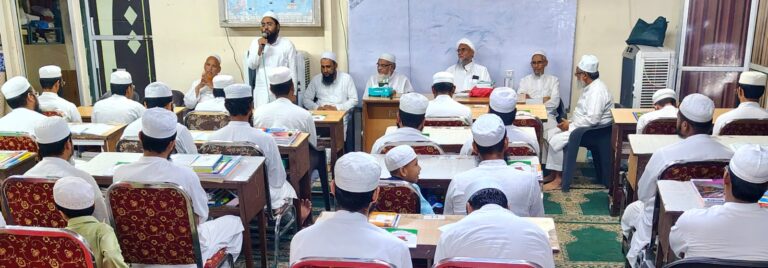
Sheikh Muhammad Yahya Baskandi Visits MMERC, Mumbai; Emphasises Purpose of Education, Spiritual Purification and Stronger Bond with Allah
Sheikh Muhammad Yahya Baskandi Visits MMERC, Mumbai; Emphasises Purpose of Education, Spiritual Purification and...
 EDUCATION
MMERC Mumbai Organises 1st English Elocution Competition
MMERC Mumbai Organises 1st English Elocution Competition "Delivering speeches in English of this standard...
 EDUCATION
Teachers' Training Session at Al-Hidayah Residential School, Badlapur
Teachers' Training Session at Al-Hidayah Residential School, Badlapur EC News Desk 12 June 2026...
 EDUCATION
 EDUCATION
Educational Crisis and the Existential Questions of Muslim Youth: An Analytical Study
Educational Crisis and the Existential Questions of Muslim Youth: An Analytical Study By: Abu...
 EDUCATION
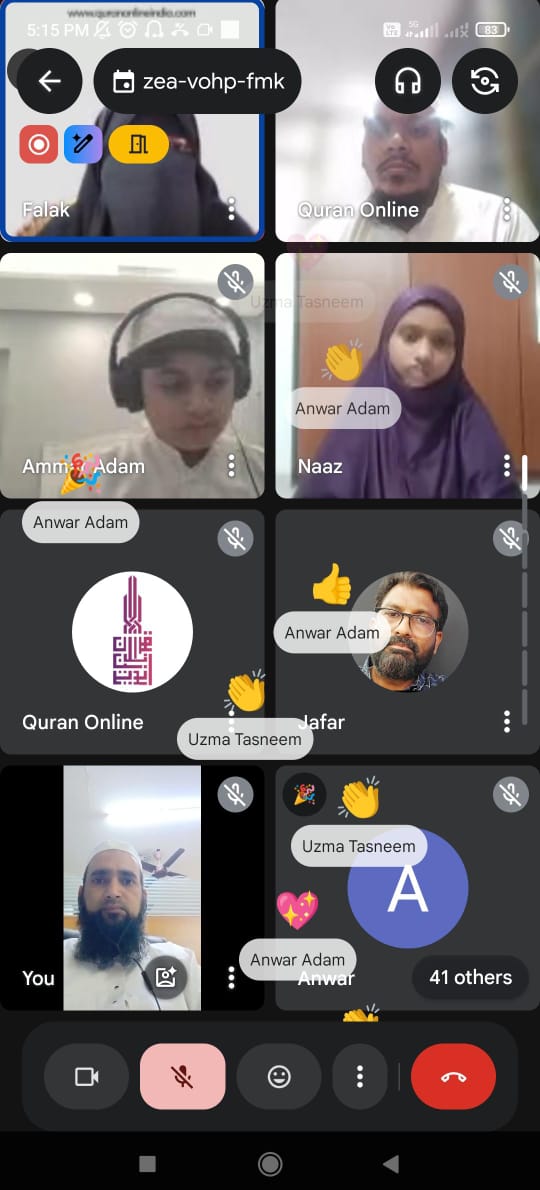
Quran Online India Organizes International Islamic Educational Program
Quran Online India Organizes International Islamic Educational Program Press Release Chennai, India – 18...
Comments (2)
Leave a Comment
Thanks, I've just been searching for information about this topic for a long time and yours is the greatest I have discovered till now. However, what in regards to the conclusion? Are you certain about the supply?
When I originally commented I clicked the "Notify me when new comments are added" checkbox and now each time a comment is added I get four e-mails with the same comment. Is there any way you can remove people from that service? Thanks!