

Uniform Civil Code Bill in Assam: A Deception in the Name of Equality

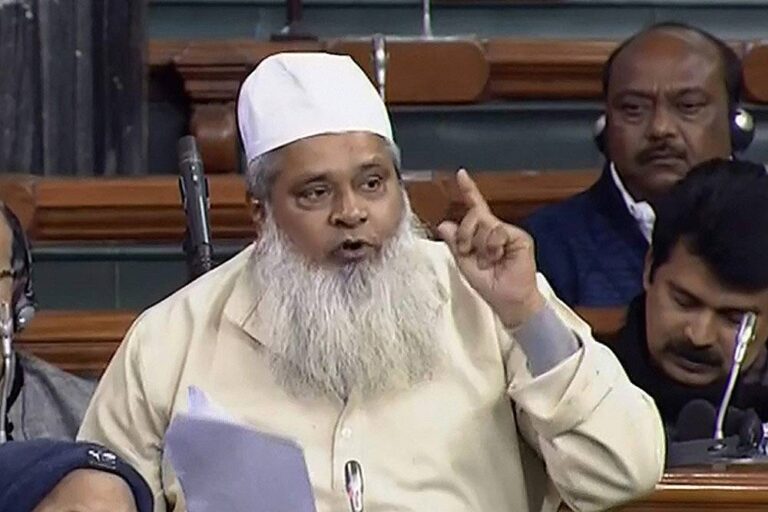
By: (Maulana) Mohammad Badruddin Ajmal
MLA, Binnakandi & Ex MP (3 Terms) from Dhubri, Assam
The Uniform Civil Code (UCC) Bill passed by the Assam Assembly is fundamentally unjust and based on inequality. Under this law, a single legal framework will govern marriage, divorce, inheritance, adoption, and other family matters for all citizens. Different personal laws followed by various religious communities have been abolished; however, tribal communities have been exempted from the law. According to this legislation, polygamy will be prohibited for everyone, including Muslims, while live-in relationships (where a man and a woman live together without marriage) will be permitted and officially registered.
Daughters will receive an inheritance share equal to that of sons, but if a father makes will of all his property to his sons during his lifetime, daughters will receive nothing from his property. The government claims that the purpose of this law is to provide equal rights to all citizens. In reality, however, it will adversely affect the religious and cultural rights and traditions of various faiths, communities, and social groups.

Women’s Rights in Inheritance
As far as inheritance rights for women are concerned, the shares allocated to women under Muslim Personal Law are appropriately just and constitute a divine law revealed by Allah (swt), which cannot be altered. The laws of inheritance in Islam are clearly outlined in ayats 11, 12, and 176 of Surah An-Nisa in the Glorious Qur’an. Furthermore, inheritance is an important and detailed subject in Islamic jurisprudence, and numerous books on the subject are taught inmadaris, among which Al-Siraji fi al-Mirath is one of the most renowned books.
It is therefore incorrect to claim that Islam always grants women less inheritance than men. Islamic inheritance laws are based on justice and responsibilities, not merely on gender differences. There are situations in Islam where men and women receive equal shares; in some cases, women receive more than men; and in others, women inherit while their male counterparts receive nothing. There are more than thirty situations in which women receive an equal or greater share than men, or become sole heirs only.
For example, if a deceased woman leaves behind a father, a son, and a maternal grandmother, both the father and the grandmother receive an equal one-sixth share,that is,16.66%(₹16.66 from every ₹100, or ₹16,660 from ₹100,000), even though the grandmother’s relationship is more distant than the father. Similarly, maternal half-brothers and maternal half-sisters always receive equal shares.
In some situations, a single surviving relative—whether male or female—may inherit the entire property. For example, if the deceased leaves only a father, he receives the entire inherited property; likewise, if only a mother survives,she will also inherit the entire inherited property. Islam also instructs that if a person wishes to distribute property during his lifetime, he should give equal shares to his sons and daughters.

There are cases where a woman’s share exceeds that of a man. For instance, if a woman dies leaving sixty acres of land and is survived by her husband, father, mother, and two daughters, then each daughter receives sixteen acres, amounting to more than half of the property collectively. If, instead of two daughters, there were two sons, each son would receive only twelve and a half acres, meaning the two sons together would inherit less than half of the property. There are many such examples where women receive more than men.
There are also situations where a male relative receives nothing while a female relative of the same degree inherits. For example, if a deceased woman leaves behind a husband, father, mother, daughter, and granddaughter, the granddaughter receives one-sixth of the property, that is, 16.66%(₹16.66 from every ₹100, or ₹16,660 from ₹100,000). If a grandson were in her place instead, he would receive nothing.
By contrast, there are only four specific situations in which a woman’s share is half of that of a man. In cases where men receive a larger share, it is because they bear greater financial responsibilities. A father is obligated to support his wife and children, whereas a mother bears no such obligation even if she is a wealthy or an earning individual. Similarly, a son is responsible for supporting his wife, children, and, in some circumstances, his parents, while a daughter is not. Therefore, in certain cases, a son’s share exceeds that of a daughter, and a father’s share exceeds that of a mother.
Thus, differences in inherited shares are based not on gender but on responsibilities. In fact, Islam has carefully safeguarded women’s rights and natural needs. Since women generally do not bear financial obligations, yet are still granted a prescribed share of inheritance, this demonstrates the fairness and balance of the Islamic system. These are not merely my personal views but are derived from the Qur’an – ayats 11, 12, and 176 of Surah An-Nisa, as well as from Hadith and the books of Islamic jurisprudence.

Polygamy in Islam
As for polygamy in Islam, it is permitted but subject to tough conditions that are not easy to fulfill. This is why polygamy is not common within the Muslim community in India. A very few Muslims practice it, and even then it often occurs with the consent of the first wife—for example, if she suffers from a chronic illness or if the couple has no children.
Islam also permits polygamy on humanitarian and social welfare grounds, such as providing support to widows or divorced women. Likewise, if women significantly outnumber men in a society, polygamy may serve as a social remedy to prevent moral downfalls and help sustain human generations.
The primary condition for polygamy in Islam is that a husband must be capable of maintaining comprehensive justice and equality among all his wives. The Glorious Qur’an explicitly states in Surah An-Nisa, ayat 3: “If you fear that you cannot be just, then marry only one.” If a man oppresses any of his wives after entering into polygamous marriages, the fault lies with the individual, not with Islamic law, and he may be punished accordingly.
It is also worth noting that among communities where polygamy is legally prohibited, the practice is at times more prevalent than among Muslims.
Notably, no comprehensive survey has been conducted in India since 1961 that clearly records citizens’ religious affiliations, marriage practices, and social demographics. According to that latest survey, the rate of polygamy among Muslims was comparatively low at 5.7 percent. Among Hindus, it was 5.8 percent, while Buddhists and Jains had even higher rates—7.9 percent and 6.7 percent respectively. The highest rate was found among tribal communities, where 15.25 percent practiced polygamy. Yet under the recent Uniform Civil Code laws enacted in Assam and some other states, tribal communities have been exempted. Furthermore, for members of religions other than Islam, polygamy was already prohibited, yet survey data showed they had a higher rates of polygamy than among Muslims.
Despite this, certain propagandists repeatedly spread the false claim that Muslims are particularly inclined toward polygamy. Such narratives are often promoted for political and sectarian purposes. The perception that Muslims are more enthusiastic about or more likely to practice polygamy is one of these propagated misconceptions.
Islam as a Way of Life for all Times and all Places
It should be clearly understood that Islam is universal and applies equally everywhere encompassing past, present and the future. It is not the case that practices such as consuming interest, drinking alcohol, or treating sons and daughters unequally become permissible for Muslims living in India while they remain forbidden for Muslims in Saudi Arabia or Indonesia. Muslims throughout the world are bound by the Qur’an and Hadith and live lives according to them.
India is a democratic country whose Constitution itself guarantees every citizen the right to live according to his or her religion. Enacting laws that harass minorities in this manner is a grave injustice, a violation of citizens’ fundamental rights, and contrary to the constitutional guarantees of religious freedom and minority rights. We oppose this injustice today and will continue to raise our voices against it in the future.
The Uniform Civil Code approved in Assam has been presented in the name of equality and uniformity, but in reality it constitutes interference in various religious and cultural traditions, particularly Muslim Personal Law. The Islamic family and inheritance system has, for centuries, been founded upon justice, balance, and responsibilities, with the rights of men and women determined according to their economic and familial obligations rather than their gender. Likewise, polygamy in Islam is not a mandatory practice but a limited permission subject to strict conditions, and any misuse of it is the fault of individuals rather than of Islamic law.
In a democratic and multi-religious, multi-cultural country, genuine equality requires respect for the religious beliefs, personal laws, and cultural identities of all citizens. Therefore, while framing and implementing such laws, it is essential to uphold the constitutional principles of religious freedom, minority rights, and India’s enduring tradition of “unity in diversity.”
You May Also Like
 Culture
My Views on Uniform Civil Code
My Views on Uniform Civil Code Maulana Mohammad Badruddin Ajmal (MP from Dhubri, Assam)...
 NATIONAL
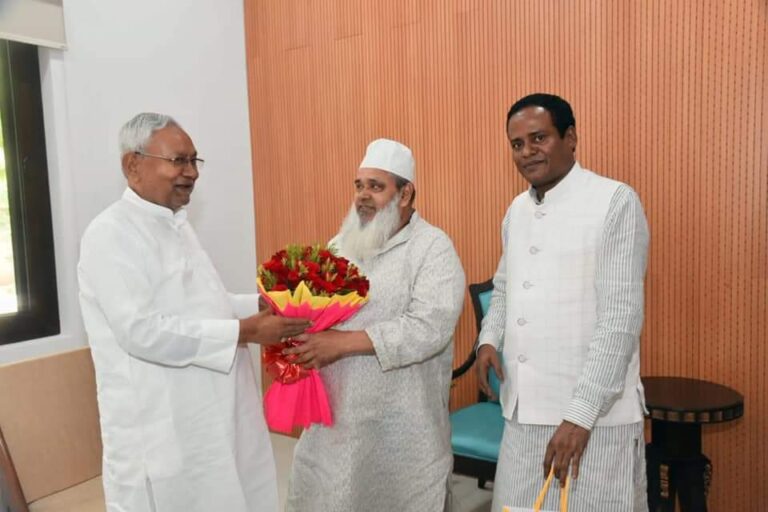
Maulana Badruddin Ajmal meets Nitish Kumar, Tejashwi Yadav and Lalu Yadav in Patna
Maulana Badruddin Ajmal meets Nitish Kumar, Tejashwi Yadav and Lalu Yadav in Patna Eastern...
 Breaking News
Brutal Assassination of Towering Muslim Leader Baba Siddique is Regretful; Criminals Must Face Exemplary Punishment: Maulana Badruddin Ajmal
Brutal Assassination of Towering Muslim Leader Baba Siddique is Regretful; Criminals Must Face Exemplary...
 Breaking News
SC Came Against Extra Judicial Property Demolition and Stayed Bulldozer Culture
SC Came Against Extra Judicial Property Demolition and Stayed Bulldozer Culture EC News Desk...
 National Politics
The 2024 Lok Sabha Election: A New Political Landscape
Mohammad Taukir Rahmani Sub-editor of Eastern Crescent and Lecturer at MMERC, Mumbai The 2024...
 Articles
Whom to Vote?
Whom to Vote? By: Najmul Huda Qasmi The Writer is pursuing Graduation at Cotton...
Comments (0)
Leave a Comment