
Majlis-ul-Ulama, Tehreek-e-Islami Maharashtra Holds One-Day Conference; Deliberates on Community Issues, Religious Freedom and Muslim Unity

Majlis-ul-Ulama, Tehreek-e-Islami Maharashtra Holds One-Day Conference; Deliberates on Community Issues, Religious Freedom and Muslim Unity
EC News Desk
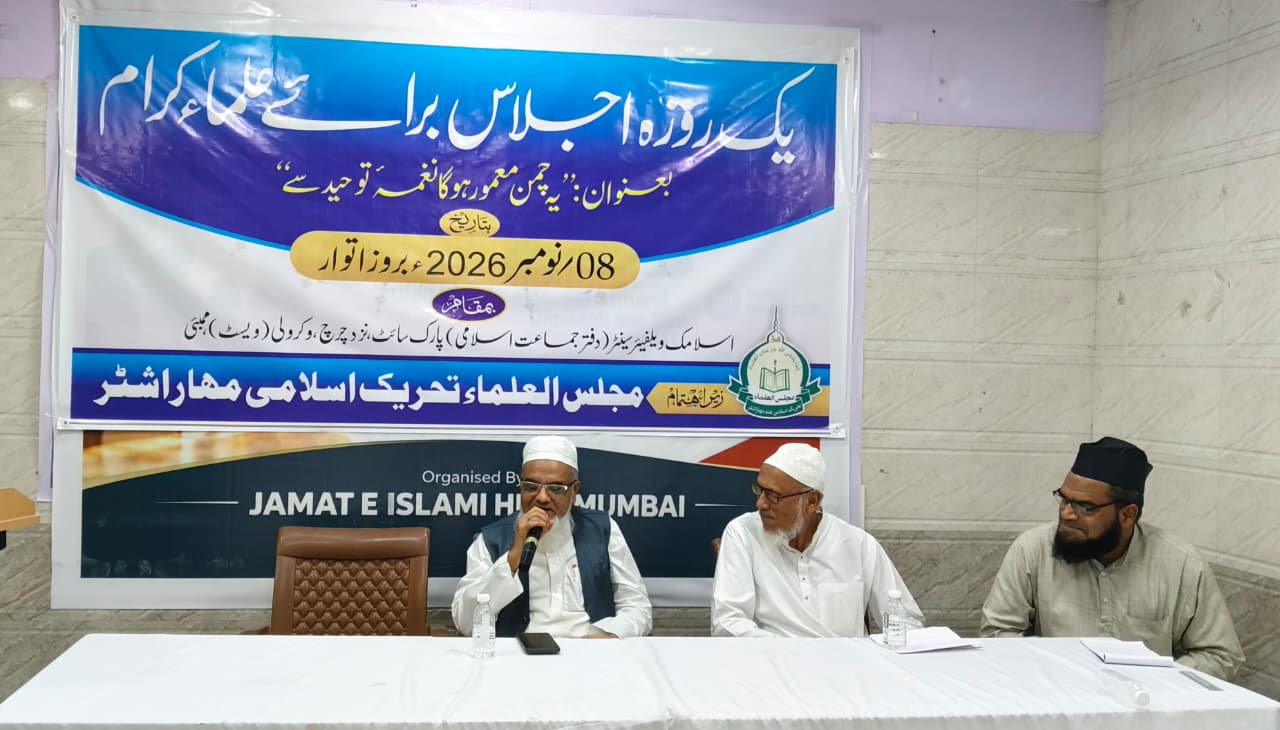
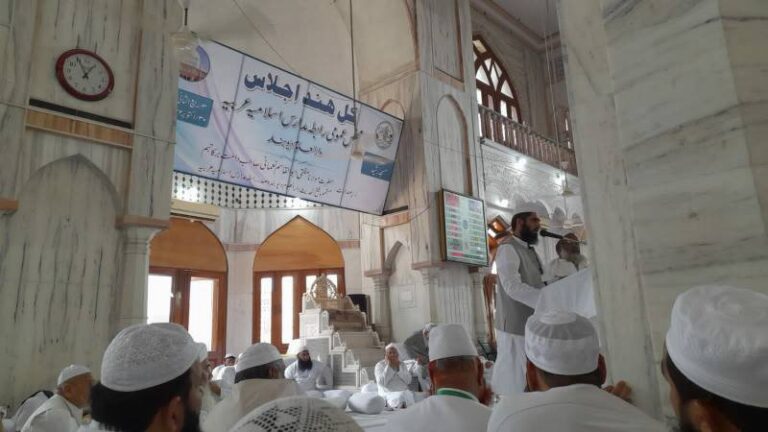
Mumbai: Majlis-ul-Ulama, Tehreek-e-Islami Maharashtra, organised a one-day conference of Islamic scholars on Sunday, November 8, 2026, at the Islamic Welfare Centre, Park Site, Vikhroli (West), Mumbai. The conference deliberated on several important issues, including the prevailing situation in the country, religious freedom, Muslim unity, effective representation of Islam, and the religious and social responsibilities of Islamic scholars. Scholars and representatives from various religious and social circles participated in the gathering.
The first session began at 10:15 am with a Qur’anic reminder delivered by Mr. Afroz Alam Islahi, who spoke in the light of the teachings of the Glorious Qur’an. This was followed by the introductory remarks of Maulana Muhammad Naseer Islahi. Mr. Shahid Latif, Editor of Inquilab, Mumbai, addressed the gathering on the topic, “An Analysis of the Present Situation in the Country”, highlighting various aspects of the prevailing national scenario. Mufti Ashfaq Qazi, President of Darul Qaza, Jama Masjid, Mumbai, spoke on “How Should Islam Be Presented Effectively in the Present Era?” Maulana Halimullah Qasmi, President of Jamiat Ulama Maharashtra, addressed the gathering on “Organisation and Development of the Muslim Ummah and the Responsibilities of Ulama”. Each address was followed by a question-and-answer session, providing participants an opportunity to raise questions and benefit from the speakers’ insights.
The second session commenced with a Hadith reminder by Maulana Akhtar Sultan Islahi. Referring to the teachings of Hadith, he discussed the various forms of trials and temptations (fitan) and ways to safeguard oneself against them. He emphasised the importance of religious awareness, intellectual alertness and a strong commitment to Islamic teachings in the present age.
A panel discussion was subsequently held on the topic, “The Present Challenges Facing the Country and Our Collective Strategy”, featuring Maulana Burhanuddin Qasmi, Maulana Akhtar Sultan Islahi and other participants.
During the discussion, Maul. M. Burhanuddin Qasmi spoke about the proposed legislation currently under discussion in the country and issues concerning religious freedom. Responding to a question on Muslim unity, he observed that bringing all organisations and groups under a single platform may not be feasible. However, meaningful unity can be achieved through mutual cooperation and sharing resources and support whenever needed. He stressed that different organisations can continue their work within their respective domains while extending cooperation to one another on common community concerns and collective needs.
Commenting on the Freedom of Religion Act 2026, he observed that although the title of the legislation sounds appealing, several of its provisions and restrictions appear to effectively close all legitimate avenues for religious conversion. He further pointed out that making the recitation of Vande Mataram compulsory for every citizen is inconsistent with the fundamental principle of religious freedom, as certain religions do not permit such practices in view of their core beliefs and teachings. Compelling individuals to act against their religious convictions, he stressed, runs contrary to the principles of religious liberty.

In the same session, Maulana Akhtar Sultan Islahi spoke about the Uniform Civil Code (UCC) and related issues. He appealed for greater awareness among Muslims regarding the subject and emphasised the need to disseminate relevant information to the wider community.
The conference concluded with an address by Maulana Naseer Islahi titled, “This Garden Shall Flourish with the Hymn of Tawheed”, in which he spoke about the message of monotheism and its propagation. He subsequently announced the conclusion of the programme.
The discussions throughout the conference highlighted the importance of Dawah, social reform, the comprehensive development of Islamic scholars, organisational strengthening, religious freedom and mutual cooperation in addressing the challenges confronting the Muslim community.
You May Also Like
 Breaking News
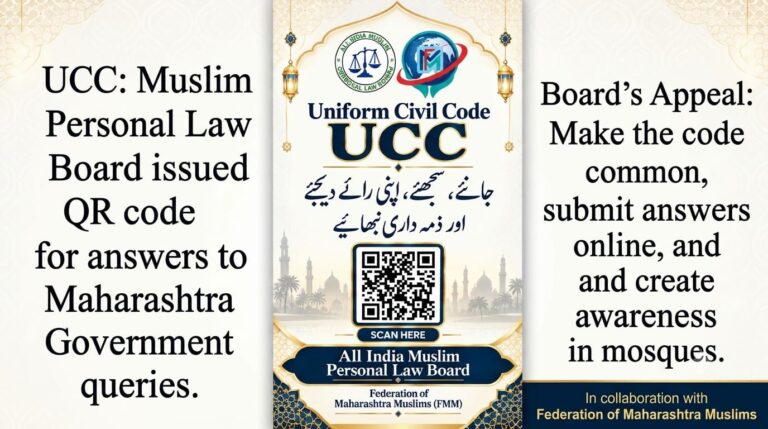
UCC: AIMPLB Issues QR Code to Help People Respond to Maharashtra Government’s Questionnaire
UCC: AIMPLB Issues QR Code to Help People Respond to Maharashtra Government’s Questionnaire Federation...
 Breaking News
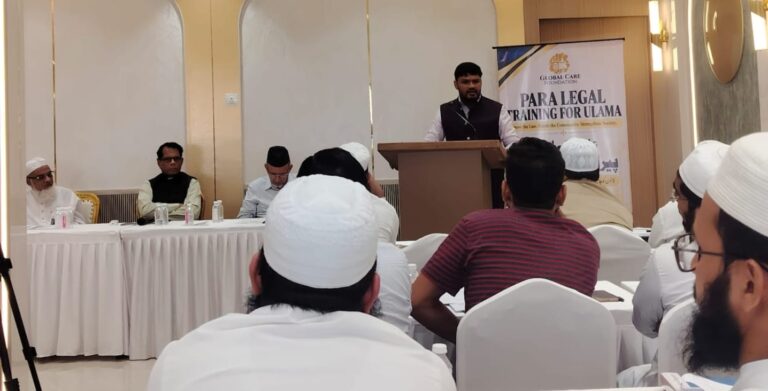
Global Care Foundation Organises Two-Day Para-Legal Training Workshop for Ulama in Mumbai
Global Care Foundation Organises Two-Day Para-Legal Training Workshop for Ulama in Mumbai Workshop focuses...
 Breaking News
All-India Rabita Madaris Islamia Meeting Held at Darul Uloom Deoband; Key Proposals Approved for Educational and Administrative Reforms
All-India Rabita Madaris Islamia Meeting Held at Darul Uloom Deoband; Key Proposals Approved for...
 Breaking News
Nepal’s Himalayan Flood: When a Glacier Collapse Turned into a Catastrophe
Nepal’s Himalayan Flood: When a Glacier Collapse Turned into a Catastrophe By: S. Masood...
 Breaking News
US Envoy Takes Dig at Indian TV News, Says Late-Night Shows Get ‘Crazier’
US Envoy Takes Dig at Indian TV News, Says Late-Night Shows Get ‘Crazier’ EC...
 Breaking News
Beyond Foreign Funds: The FCRA Bill and the Question of Institutional Survival
Beyond Foreign Funds: The FCRA Bill and the Question of Institutional Survival By: Mufti...
Comments (0)
Leave a Comment