
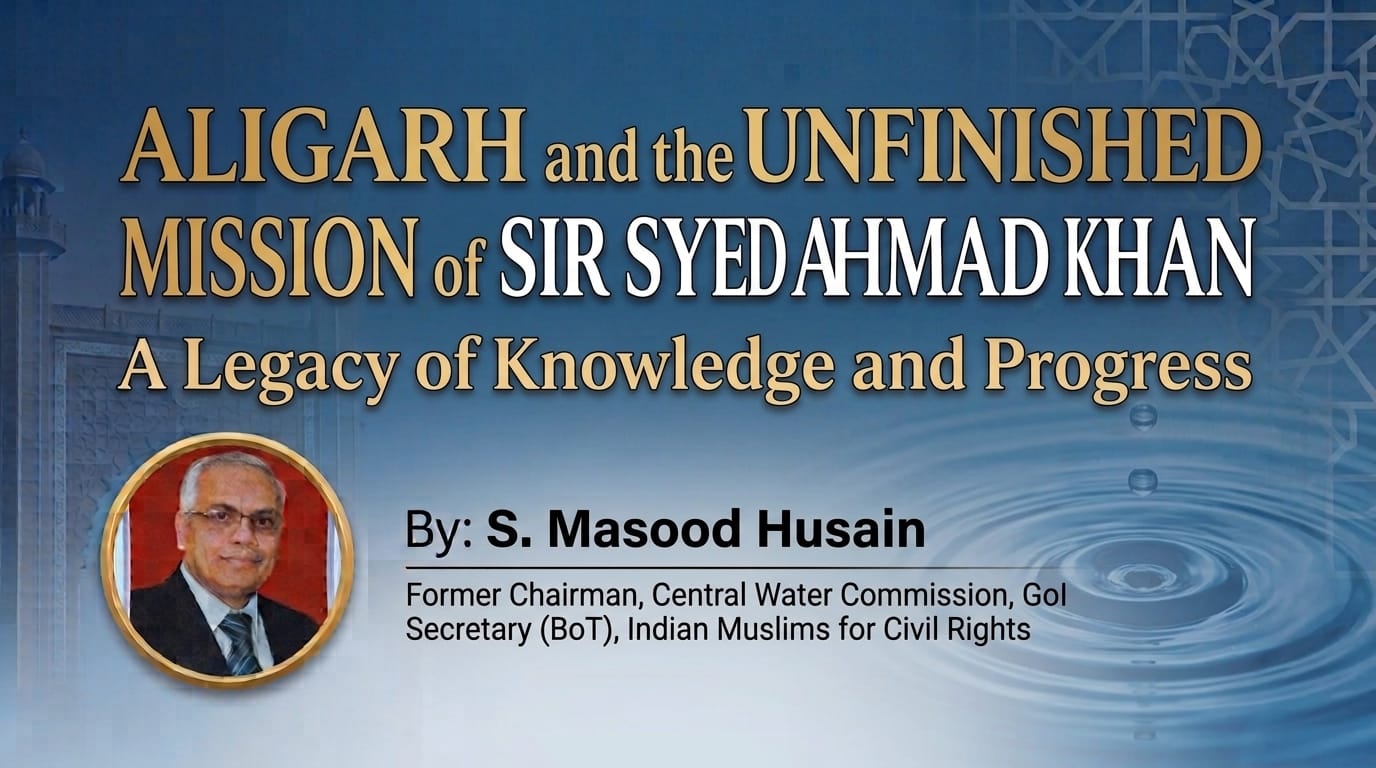
Aligarh and the Unfinished Mission of Sir Syed Ahmad Khan

Aligarh and the Unfinished Mission of Sir Syed Ahmad Khan
By: S. Masood Husain
AMU’s greatest challenge is not to preserve its past, but to renew the intellectual revolution that Sir Syed began.
The Aligarh Muslim University occupies a unique place in the history of modern India. Few educational institutions have had such a profound influence on the intellectual, social and political evolution of a community. Its origins lie in the vision of Sir Syed Ahmad Khan, who recognised, in the aftermath of 1857, that the greatest challenge before Indian Muslims was not merely political decline but educational and intellectual backwardness.
Sir Syed’s response was revolutionary. He wanted Muslims to acquire proficiency in English, modern sciences and contemporary knowledge while retaining their ethical and cultural heritage. The Scientific Society, the journal Tehzib-ul-Akhlaq and the Muhammadan Anglo-Oriental College were all parts of this larger programme. His objective was to create a bridge between tradition and modernity, faith and reason, and the East and the West. AMU itself describes his purpose as combining Western education with Islamic values and developing a scientific temperament.
But after nearly 150 years of the Aligarh movement, an uncomfortable question deserves to be asked: Has the institution remained sufficiently faithful to the transformative spirit of Sir Syed’s vision?
The answer cannot be an outright yes or no.

An extraordinary success—but an incomplete mission
There is no denying AMU’s extraordinary achievements. It has produced generations of scientists, doctors, engineers, administrators, academics, writers, politicians and public intellectuals. It has opened its doors to students from different parts of India and the world and today offers hundreds of courses in modern as well as traditional disciplines.
Yet the success of a university cannot be measured only by the number of degrees awarded or distinguished alumni produced. Sir Syed’s objective was much larger. He wanted to transform the Muslim mind.
He wanted Muslims not merely to become educated but to become intellectually confident, rational, scientifically minded, socially progressive and capable of engaging constructively with the rapidly changing world. This is where the unfinished part of the Aligarh mission lies.
From transforming minds to preserving identity
Over the decades, a gradual change in emphasis appears to have taken place. Sir Syed’s central concern was modernisation of the Muslim community. In later periods, the preservation of Muslim identity and institutional interests sometimes came to occupy greater attention.
There is, of course, nothing wrong with preserving cultural identity. Sir Syed himself valued Muslim history, language and traditions. His genius was precisely that he did not regard cultural identity and modern education as contradictory.
The danger arises when identity becomes defensive.
A modern Muslim university should give its students the confidence to engage with modern science, other religions, different philosophies and competing political and social ideas without feeling threatened. Sir Syed wanted Muslims to enter the modern world with confidence, not retreat from it in the name of preserving identity.

The weakening of the reformist spirit
Sir Syed was not simply an educationist; he was a social reformer. Through Tehzib-ul-Akhlaq, he challenged social customs, superstition and intellectual stagnation. His Scientific Society sought to make modern knowledge accessible and cultivate scientific thinking.
The question today is whether this spirit of internal reform and critical self-examination remains sufficiently strong.
A university inspired by Sir Syed should be among the first places where difficult questions concerning Muslim society are discussed openly:
Why does educational backwardness persist in sections of the community? Why is participation in science and technology inadequate? Why do poverty, unemployment and social conservatism remain serious problems? How can women’s education and economic participation be accelerated? How can Islamic thought respond creatively to democracy, constitutionalism, modern economics, artificial intelligence and scientific discoveries?
These questions require courage. A genuinely modern institution must be prepared to question not only the outside world but also its own community’s inherited assumptions.
Religion must coexist with reason
Sir Syed’s greatest intellectual contribution was his attempt to reconcile faith with reason. He did not believe that modern science represented an enemy of Islam. On the contrary, he regarded scientific inquiry as essential to human progress. His educational programme deliberately sought to combine modern Western learning with Islamic values. That balance needs renewed emphasis.
The answer to excessive secularisation is not religious isolation, just as the answer to religious conservatism is not rejection of faith. The real Aligarh tradition should be faith with reason, tradition with reform and morality with scientific inquiry.

AMU should therefore become a leading centre for serious intellectual engagement between Islam and contemporary knowledge—not merely a place where Islam is defended against criticism.
The danger of narrowness
Another danger is sectarian and ideological narrowness. A university serving Indian Muslims must be particularly careful not to allow differences among Sunni, Shia, Deobandi, Barelvi or other traditions to become barriers to academic or social interaction. Differences of religious interpretation are legitimate; intellectual hostility is not.
Similarly, religious activism has a legitimate place in a democratic university, but no ideological group should be allowed to define the intellectual boundaries of the institution.
The true Aligarh tradition should produce students who can discuss religion, science, politics and philosophy with confidence, civility and intellectual independence.
The national dimension of Sir Syed’s vision
Sir Syed’s project should also not be interpreted as an exercise in community isolation.
His objective was to empower Muslims to participate effectively in India’s public life. The university’s own historical account emphasises his desire for Muslims to acquire education and participate in government and public affairs.
Therefore, the ultimate measure of Aligarh’s success should be its contribution not only to Muslims but to India as a whole.
AMU should be a national intellectual resource: producing scientists who advance Indian technology, economists who contribute to development, administrators who strengthen governance, doctors who serve society and scholars who deepen India’s understanding of its diverse civilisational traditions.
A new Aligarh movement is needed
The answer is not to return nostalgically to the Aligarh of the nineteenth or early twentieth century. Sir Syed himself was fundamentally opposed to intellectual stagnation.
What is required is a new Aligarh movement for the twenty-first century.
Its priorities should include:
– Scientific temper: Make scientific reasoning a culture, not merely a curriculum subject.
– Critical thinking: Encourage students to question assumptions and examine evidence.
– World-class research: Give much greater emphasis to science, technology, medicine, engineering, economics and emerging fields such as artificial intelligence.
– Social reform: Make Muslim educational, social and economic advancement a major field of research and action.
– Women’s empowerment: Treat women’s education, professional advancement and leadership as indispensable components of community progress.
– Interfaith engagement: Make AMU a major centre for dialogue among India’s religious and cultural traditions.
– Intellectual pluralism: Ensure that no religious or ideological faction monopolises campus discourse.
– Professional excellence: Aim to produce global-quality professionals rather than merely degree holders.
– Entrepreneurship: Encourage innovation, start-ups and employment creation among young Muslims.
– National engagement: Make greater contribution to India’s scientific, economic, administrative and cultural development.
AMU already possesses many of the institutions and academic resources necessary for such a transformation. Its Centre for Promotion of Science, established in 1985, itself recognised the need to address inadequate science education among Muslim students and to extend scientific education beyond the university.
From an institution to a movement once again
The greatest tribute to Sir Syed would not be to celebrate him every year, name buildings after him or repeat his quotations. It would be to revive his intellectual courage.
Sir Syed confronted a deeply conservative society and argued that Muslims could not prosper by remaining intellectually isolated. He accepted modern science without surrendering his faith and sought reform without abandoning cultural identity.
That is the legacy that needs renewal.
AMU must therefore ask itself a fundamental question:
Are we merely preserving the institution that Sir Syed created, or are we continuing the intellectual revolution that he began?

The distinction is crucial.
The Aligarh movement was never intended to be a museum of Muslim achievement. It was intended to be an engine of Muslim regeneration.
Its future therefore lies not in becoming narrower, more defensive or more preoccupied with identity, but in becoming more scientific, more intellectually adventurous, more socially reformist, more inclusive and more deeply engaged with India and the world.
Sir Syed’s unfinished mission is ultimately not about Aligarh alone. It is about whether education can transform a community’s mindset and enable it to meet a changing world with knowledge, confidence and dignity.
That is the Aligarh challenge—and also its greatest opportunity.
You May Also Like
 Articles
Smart Selection of Qur'anic Verses by Iran During Ayatullah's Funeral
Smart Selection of Qur'anic Verses by Iran During Ayatullah's Funeral By M. Burhanuddin Qasmi...
 Articles
Radiant Beacon of Spirituality: Hazrat Maulana Zulfiqar Ahmad Naqshbandi (Rah.)
By: Khursheed Alam Dawood Qasmi First Acquaintance with Peer Sahib: It was around the...
 FEATURE
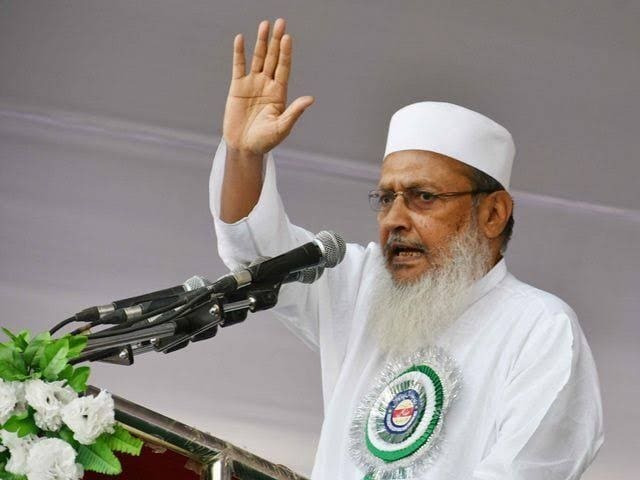
Mufakkire Islam Maulana Sayyid Mohammad Wali Rahmani (Rah.): A Genius Scholar and Fearless Leader
Mufakkire Islam Maulana Sayyid Mohammad Wali Rahmani (Rah.): A Genius Scholar and Fearless Leader...
 Articles
Linking the ❤️ (love) Emoji to Disbelief and Polytheism is as Illogical as Finding 'Hell' in 'Hello' and 'Mosquitoes' in 'Mosque'
Linking the ❤️ (love) Emoji to Disbelief and Polytheism is as Illogical as Finding...
 Book Reviews
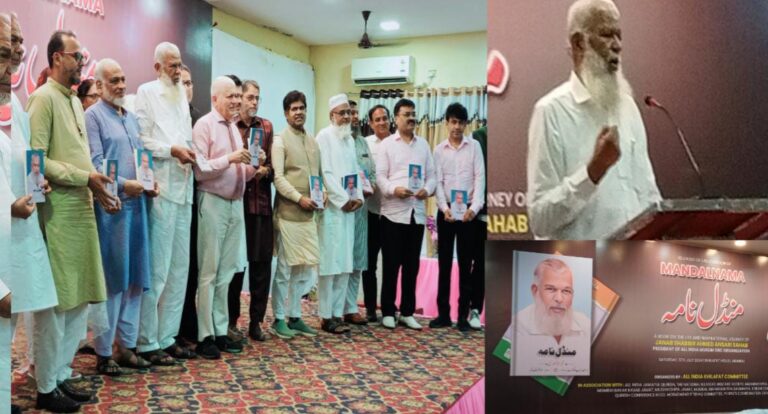
The Inspirational Journey of Shabbir Ahmad Ansari Unveiled in 'Mandal Nama'
The Inspirational Journey of Shabbir Ahmad Ansari Unveiled in 'Mandal Nama' Mohammad Taukir Rahmani...
 Business
What are you drinking, SOFT or HARD – is it Coke, Cocaine or Alcohol?
What are you drinking, SOFT or HARD – is it Coke, Cocaine or Alcohol?...
Comments (0)
Leave a Comment