
Uniform Civil Code and Anti-Conversion Laws

Uniform Civil Code and Anti-Conversion Laws
UCC: Possible Implications for Religious Diversity and Minority Rights Discussed at MMERC Lecture
EC News Desk
29 November 2026
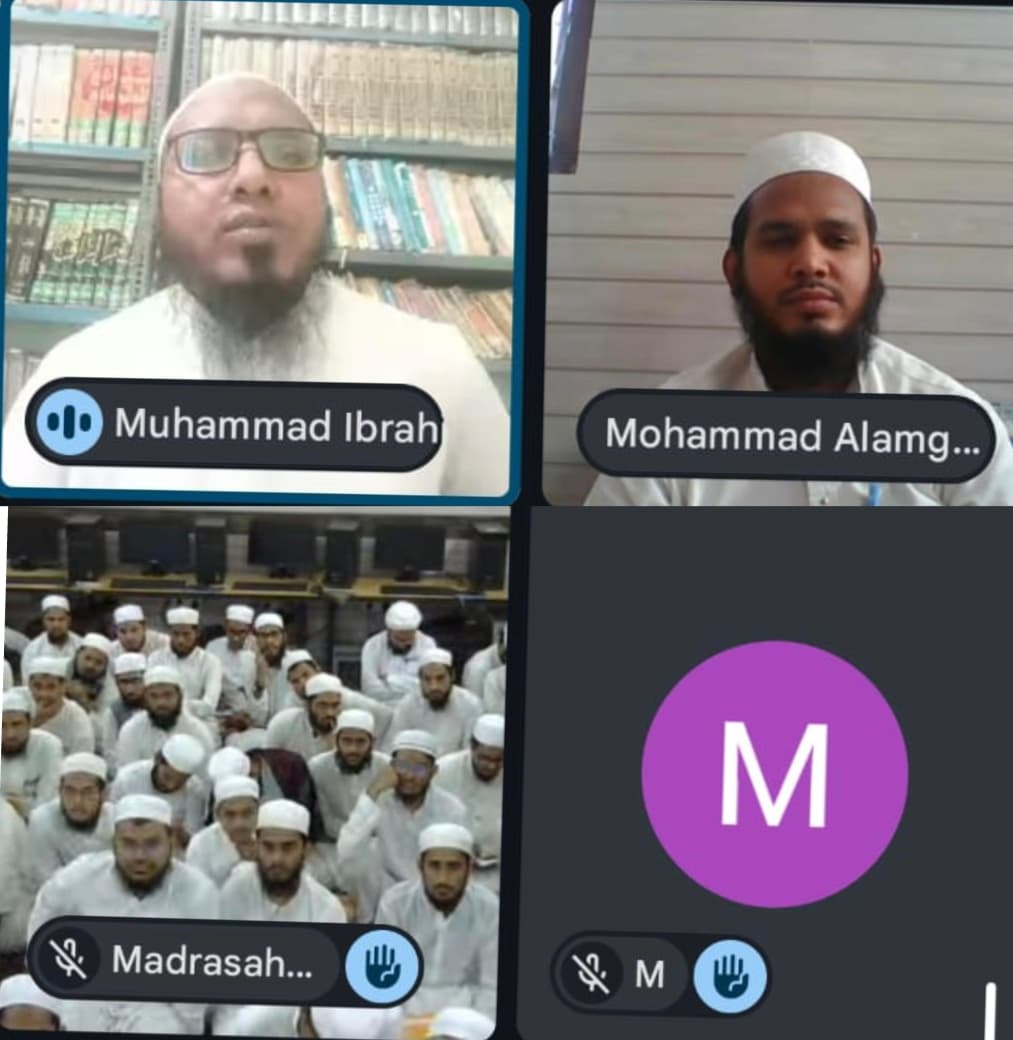
With the objective of keeping students informed about contemporary legal, constitutional and socio-political developments of India, Markazul Ma’arif Education and Research Centre (MMERC), Mumbai, organised an online lecture on Sunday, 29 November 2026, on the topic “Uniform Civil Code (UCC) and Anti-Conversion Laws.” Students from its affiliated institutions across the country participated in the programme.
The affiliated institutions are:
1. MIERC, Ankleshwar, Gujarat
2. Jamia Islamia Jalalia, Hojai, Assam
3. Al-Mahadul Aali Al-Islami, Hyderabad, Telangana
4. AUERC, Shalukpara, Howrah, West Bengal
5. Jamia Assam Darul Hadith Madarsa, Joynagar, Hojai, Assam
6. Madrasa Jame-ul-Uloom, Peela Naka, Balapur, Akola, Maharashtra
7. Madarsa Islamia Waqf, Sufi Bagh, Surat, Gujarat
8. Jamia Islamia Banjari, Indore, Madhya Pradesh.
The programme was anchored by Maulana Salman Alam Qasmi of MMERC, Mumbai and Maulana Mohammad Alamgir Qasmi of Madrasa Islamia Waqf, Surat, Gujarat.
This highly informative lecture was delivered by Adv. Maulana Ibrahim Qasmi Solapuri, who addressed the legal and constitutional dimensions of the Uniform Civil Code and Anti-Conversion Laws.
The speaker began by explaining the difference between criminal law and civil law. He pointed out that criminal laws generally apply uniformly across the country, whereas personal laws governing matters such as marriage, divorce, inheritance and guardianship vary among religious communities.
He then discussed the historical background and legal framework of Muslim Personal Law, particularly the Muslim Personal Law (Shariat) Application Act, 1937, explaining its significance in the application of Shariat to Muslims in India. He also highlighted relevant constitutional provisions, fundamental rights and the Directive Principles of State Policy.
Discussing the Uniform Civil Code, the speaker highlighted concerns regarding its possible implications for India’s religious and cultural diversity and the rights of minority communities. He also examined Anti-Conversion Laws in the context of religious freedom, drawing attention to the Quranic principle, “There is no compulsion in religion” (Surah Al-Baqarah, 2:256).
Towards the conclusion, he drew attention to the growing intellectual and cultural challenges confronting Muslims in India. He stressed that one of the foremost responsibilities of the Muslim community is to safeguard the Islamic faith and identity of the younger generation through sound religious education, intellectual awareness and reasoned engagement with contemporary issues.
During the question-and-answer session, the speaker particularly encouraged madrasa graduates to develop a sound understanding of contemporary legal, constitutional and socio-political issues so that they could serve the nation and the community more effectively. He emphasised that religious scholars must remain well-informed and intellectually equipped to address the challenges of the present age.
The lecture proved to be informative and thought-provoking, providing participants with valuable insights into significant legal, constitutional and social issues. It also underscored the importance of intellectual preparedness, awareness and informed engagement among students, particularly those pursuing religious education. The programme concluded with a Dua (supplication) led by the guest speaker, Adv. Maulana Ibrahim Qasmi Solapuri.

You May Also Like
 FEATURE
Aligarh and the Unfinished Mission of Sir Syed Ahmad Khan
Aligarh and the Unfinished Mission of Sir Syed Ahmad Khan By: S. Masood Husain...
 ENTERTAINMENT
Memorable Visit to Chipata for the Cause of Tablighi Ijtima
Memorable Visit to Chipata for the Cause of Tablighi Ijtima By: Khursheed Alam Dawood...
 Uncategorized
What Is Tax and How Does It Work?
What Is Tax and How Does It Work? Mohammad Taukir Rahmani EC Exclusive A...
 Business
What are you drinking, SOFT or HARD – is it Coke, Cocaine or Alcohol?
What are you drinking, SOFT or HARD – is it Coke, Cocaine or Alcohol?...
 Uncategorized
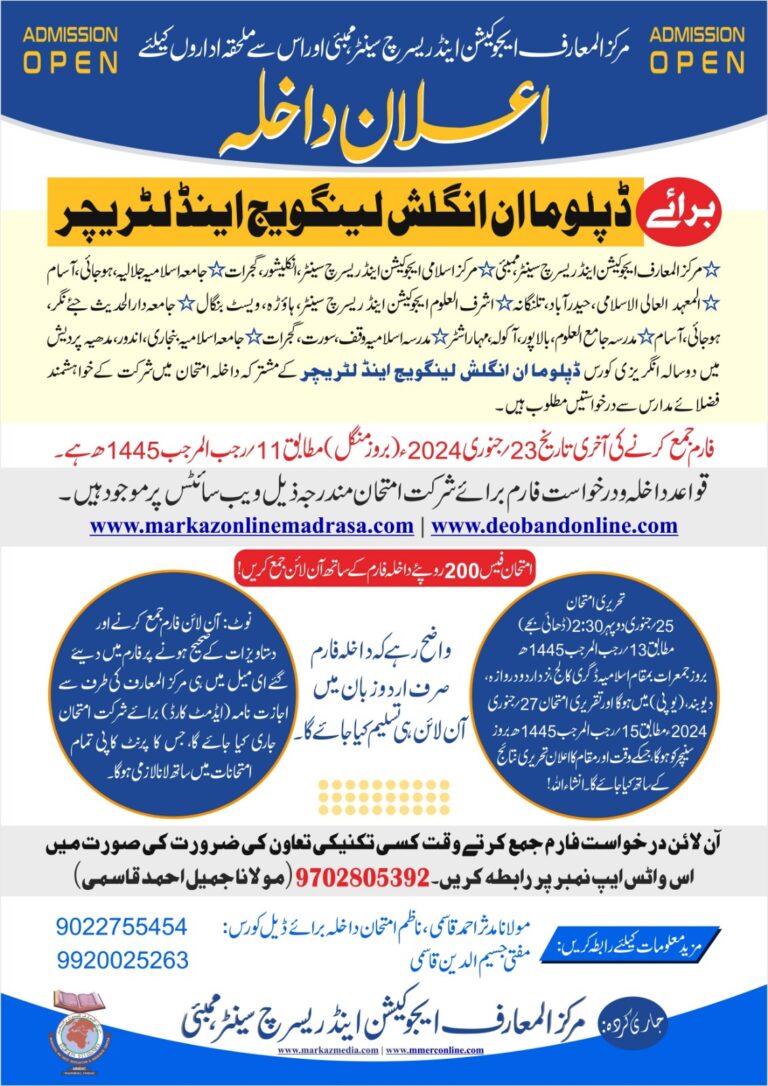
Dates Announced for Common Entrance Exams for Diploma in English for Madrasa Graduates
Online Forms available for the entrance exams for the institutions affiliated to Markazul Ma’arif....
 Madrasa
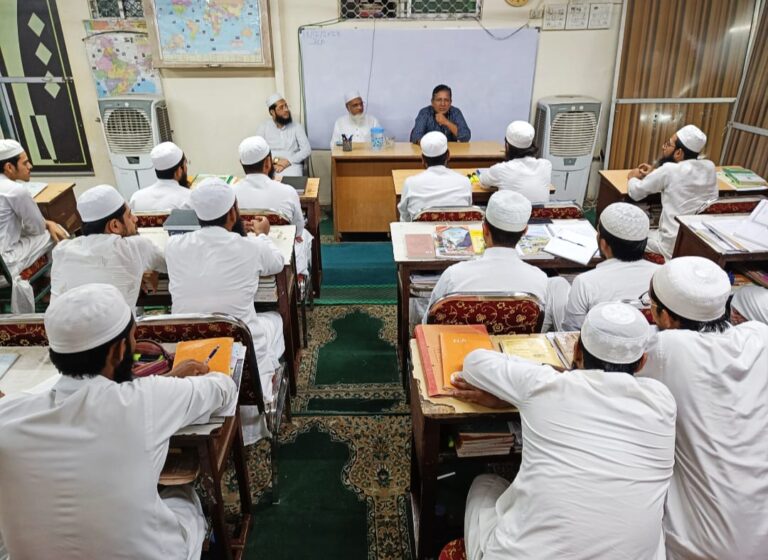
Dr. KM Baharul Islam Paid a Visit to MMERC and Shared Thought-Provoking Ideas with DELLL Students
By: Muaz Muddassir Qasmi A very dynamic personality Dr. KM Baharul Islam, Professor...
Comments (0)
Leave a Comment