
Tablighi Jamaat: A Potential Catalyst for Global Bans

Tablighi Jamaat: A Potential Catalyst for Global Bans
By; M. Burhanuddin Qasmi
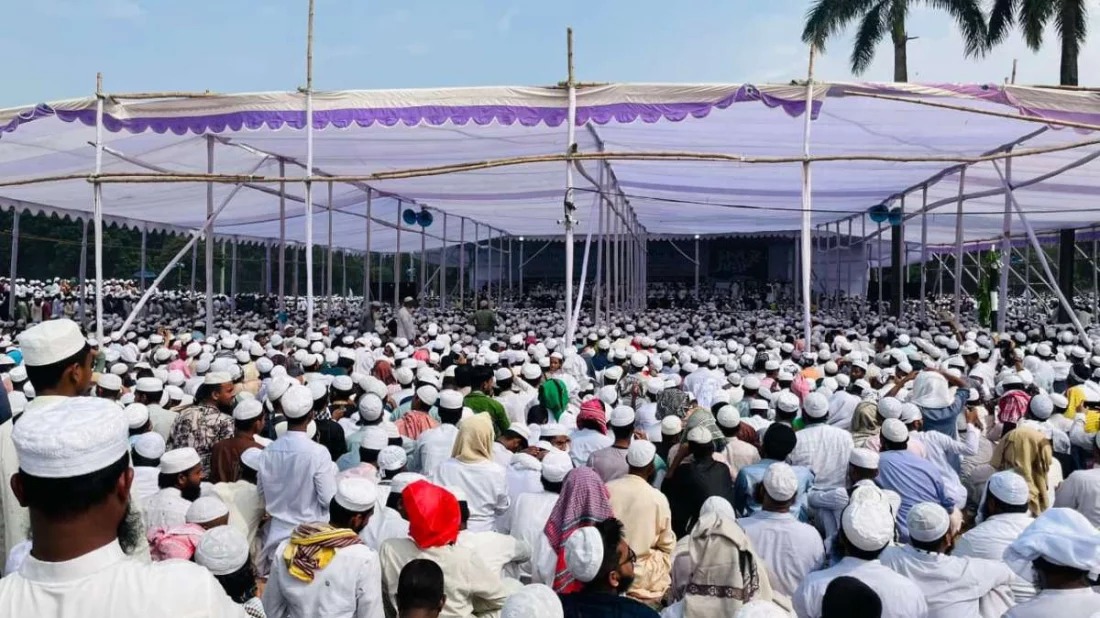
Many readers have inquired about my views on the Tablighi Jamaat, particularly following the recent unfortunate events in Bangladesh. Here are my observations.
The 2015 division of Tablighi Jamaat into Shura and Imarat has been detrimental to the Muslim community, especially in the Indian subcontinent. I have extensively written about this controversy since 2016, with varying degrees of agreement from readers. I warned in 2016 that the Jamaat was at a critical juncture, a point from which its trajectory has unfortunately deviated.
It’s crucial to remember that Islam belongs to all of humanity and its Tabligh [propagation] is not a matter of copyright. Preaching must align with the Qur’an, Sunnah, and the consensus of respected Islamic scholars.
Tablighi Jamaat is not synonymous with Islam itself. It is a reformist movement that emerged in the early 20th century only. While “Tabligh” generally refers to the dissemination of Islam to non-Muslims, the Jamaat’s primary focus is on the internal reformation of Muslims, thus the term “Tabligh” loosely fits to it.
In my view, the current leadership of the Tablighi Jamaat, particularly those associated with the Nizamuddin Markaz in New Delhi, has strayed from the principles established by its founders, Maulana Mohammad Ilyas (ra) and Maulana Mohammad Zakariya (ra). Given the sensitivity of this issue and the vast number of individuals connected to the Jamaat worldwide, scholars (ulama) must exercise utmost caution and wisdom in addressing these concerns. However, qualified scholars cannot remain indifferent to their responsibilities towards the broader Muslim community and the potential repercussions of recent incidents, such as those in Tongi, Bangladesh in 18 December 2024, and the one at Nizamuddin Markaz in 2016.
I foresee a concerning possibility: governments hostile to the practice of Islam may increasingly ban Tablighi Jamaat activities, citing repeated internal clashes and negative reports from various “agencies”. While we hope to prevent such bans, they resemble the fates of Hasan al-Banna’s Ikhwan and Zakir Naik’s IRF, unless the Jamaat leadership on both sides undergoes a complete transformation.
Open and scholarly discussions about the current functioning and attitudes within the Tablighi Jamaat are necessary. However, these discussions must be conducted with scholarly rigor, ethical communication, and the sincere intention of promoting Islamic understanding and community reformation (Islah).
I advise Muslims, currently associated with the Tablighi Jamaat to continue their involvement, as it has been a successful and tested movement for self-reformation within the Muslim world. However, it is essential to avoid falling prey to internal divisions, heated leadership debates, or personal animosity among fellow members.
It is also crucial for ulama and muftis to recognize that not all negative actions by a group or individuals constitute Haram, Kufr, or Shirk according to Islamic Shariah. Therefore, labeling all individuals with terms like “gumrah” or “bedin” should be strictly avoided.
You May Also Like
 Breaking News
₹10 Lakh Government Grant Sanctioned under Madrasa Modernisation Scheme
₹10 Lakh Government Grant Sanctioned under Madrasa Modernisation Scheme Applications open until November 13;...
 Editorial
“Iran War: A Strategic Trap for the US–Israel Axis?”
“Iran War: A Strategic Trap for the US–Israel Axis?” By: M. Burhanuddin Qasmi Editor:...
 Editorial
ONE WAR, MANY FRONTS
ONE WAR, MANY FRONTS By: M. Burhanuddin Qasmi Editor: Eastern Crescent, Mumbai The fog...
 International Politics
Attack on Iran: Understanding the Reality and a New War on the Diplomatic Front
Attack on Iran: Understanding the Reality and a New War on the Diplomatic Front...
 Qur'anic Wisdom
System of Zakat: Purifying Wealth, Empowering Society
System of Zakat: Purifying Wealth, Empowering Society By: Mufti Jaseemuddin Qasmi Coordinator Online Darul...
 RELIGION
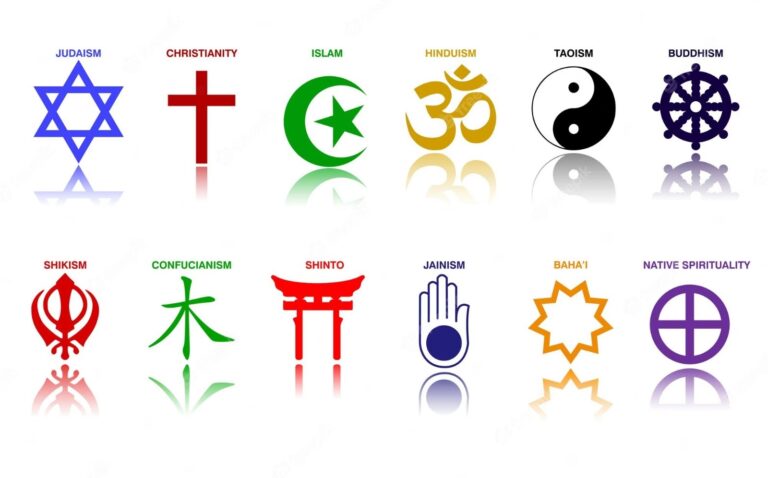
A Glance Over Major Religions of the World
A Glance Over Major Religions of the World By M. Burhanuddin Qasmi Director: Markazul Ma’arif...
Comments (1)
Leave a Comment
Wow! This could be one particular of the most beneficial blogs We have ever arrive across on this subject. Basically Excellent. I am also an expert in this topic so I can understand your hard work.