
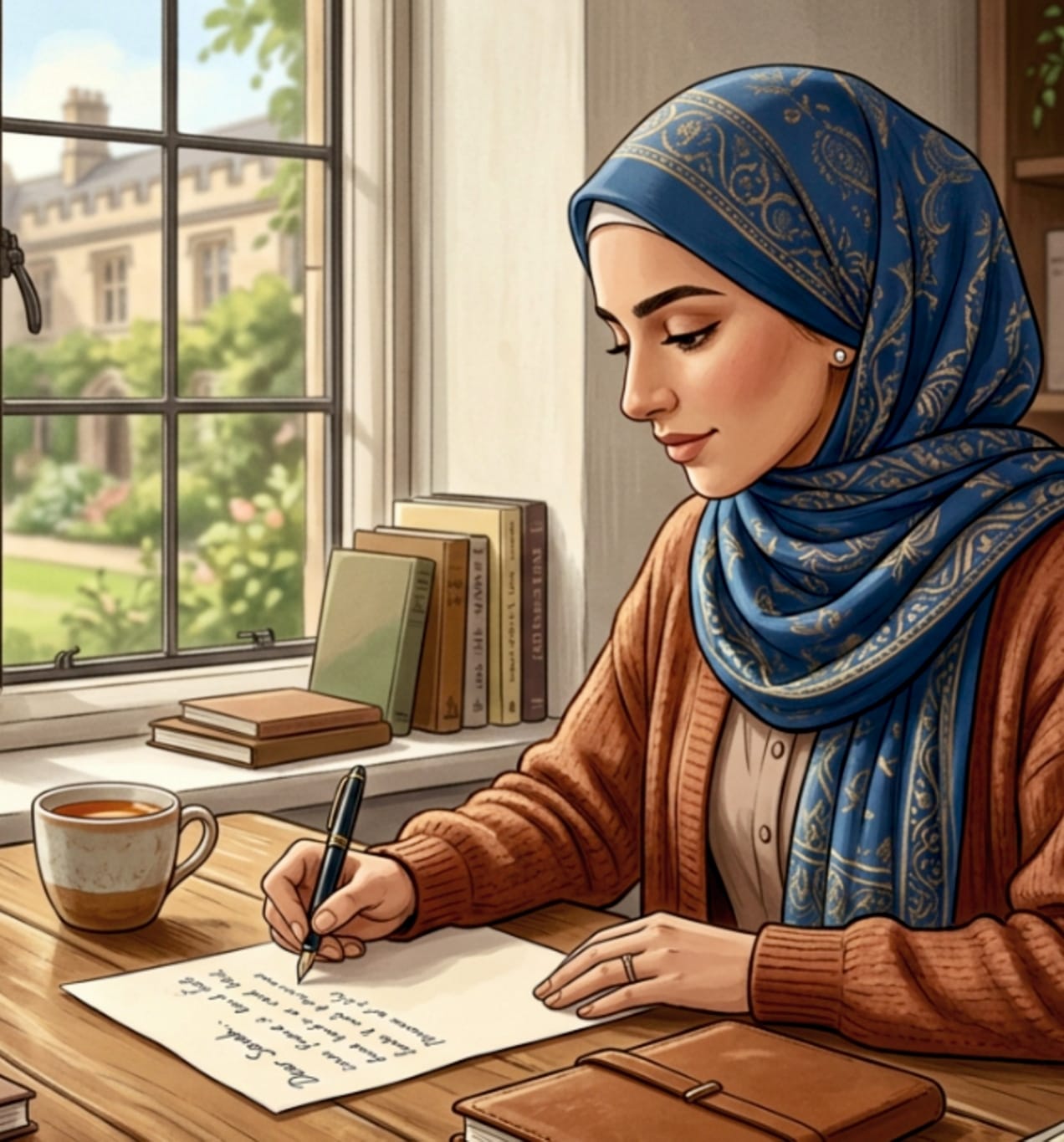
An Open Letter from a Sister

An Open Letter from a Sister
By: Bint Abdullah
Mumbai: 27 April 2026
O, my dear brothers in humanity!
When you step outside your home, you are likely to encounter two contrasting types of women. The first is a woman who has succumbed to temptation, symbolically represented by Zulekha—the wife of al-‘Azīz (the King of Egypt) as described in Surah Yusuf of the Glorious Qur’an. She beautifies herself, applies perfume, and adorns herself with makeup, her appearance often conveying an unspoken invitation. In such a moment, you are reminded of the noble example of Prophet Yusuf (Alaihis Salaam), who, when confronted with temptation, immediately declared: “I seek refuge in Allah…” (Qur’an 12:23).
The second is a woman who observes modesty and hijab, yet is compelled by necessity to step outside her home. Her condition reflects the dignity and restraint of the daughters of Prophet Shu‘aib (Alaihis Salaam), who said: “We do not water (our flocks) until the shepherds take (their flocks) away, and our father is an old man…” (Qur’an 28:23). In such a situation, one must follow the example of Prophet Musa (Alaihis Salaam), who offered help with utmost decency and withdrew without any expectation or impropriety: “So he watered (their flocks) for them; then he turned back to the shade…” (Qur’an 28:24).
These two Qur’anic paradigms establish a timeless ethical framework: restraint in the face of temptation and dignified assistance where needed. The chastity of Hazrat Yusuf (Alaihis Salaam) became the means of his elevation to honor and authority in Egypt as al-‘Azīz of Misr, while the sincere service of Hazrat Musa (Alaihis Salaam) was rewarded with inner contentment, shelter, and a righteous spouse—Ṣaffura, the daughter of Hazrat Shu’aib (Alaihis Salaam) (cf. Qur’an 28:25–27).
May Allah grant you modesty and elevate you higher—Aameen!
O, my dear sisters in humanity!
A woman’s dress is not merely a matter of personal preference; rather, it reflects a broader moral ecosystem—her father’s upbringing, her brother’s sense of honor, her husband’s dignity, her mother’s sincere guidance, and above all, her consciousness that Allah is ever watchful. The Qur’an recounts how people addressed Hazrat Maryam (Alaihas Salaam), saying: “O sister of Harun, your father was not a man of evil, nor was your mother unchaste…” (Qur’an 19:28). This address highlights how individual identity is often perceived as a reflection of familial righteousness and moral legacy.
A female classmate once shared a deeply thought-provoking reflection: “When I see a girl excessively adorned and immodest, my thoughts turn to her parents, and I recall the words of Allah: ‘Stop them; indeed, they are to be questioned…’ (Qur’an 37:24). This increases my own sense of modesty, lest my mother be questioned because of me.” Such reflections illustrate how personal conduct is intertwined with a sense of accountability that extends beyond the self.
Indeed, modesty is among those vital subjects that warrant thoughtful engagement in our contemporary age, particularly across social media platforms where moral values are continuously shaped and reshaped. May Allah grant all of us the ability to uphold modesty, act with dignity, and embody the noble character taught by His Prophets, including the last and final Prophet Hazrat Muhammad (Sallallahu Alaihi Wa Sallam)—A’meen!
You May Also Like
 Health
Discussing daughters' rights, 35000 ft above the ground
Discussing daughters' rights, 35000 ft above the ground By Mohammed Wajihuddin The plane was...
 Breaking News
Muslim Women Delegation Meets National Commission for Women, Submits Complaint Against Bihar Chief Minister
EC News Desk 23/12/2025 A delegation of Muslim women led by Mrs. Mamdooha Majid,...
 SOCIETY
Khadījah Al Kubra (RA): The First Herald of Faith and Sacrifice
Khadījah Al Kubra (RA): The First Herald of Faith and Sacrifice By: Dr. Mohd...
 Europe
The Status of Women: From History’s Dark Corridors to the Light of Islam
The Status of Women: From History’s Dark Corridors to the Light of Islam Mohammad...
 EDUCATION
Naima Khatoon: A Trailblazer in Academia and Leadership
Naima Khatoon: A Trailblazer in Academia and Leadership The AMU Alumna Shines in the...
 RELIGION
A Glance Over Major Religions of the World
A Glance Over Major Religions of the World By M. Burhanuddin Qasmi Director: Markazul Ma’arif...
Comments (0)
Leave a Comment