

THE QUR’AN WITHOUT ARABIC TEXT IS NOT THE QUR’AN

THE QUR’AN WITHOUT ARABIC TEXT IS NOT THE QUR’AN
By: M. Burhanuddin Qasmi
Editor, Eastern Crescent – Mumbai
Among all revealed scriptures and sacred texts known to humankind, the Glorious Qur’an stands unique — in preservation, authenticity, and continuity of its original language. It remains the only divine revelation that exists precisely as it was revealed more than fourteen centuries ago, in the same language, letters, and recitation style.
Early Religious Scriptures and Their Original Languages
Human civilization has witnessed several divine and religious texts throughout history, each revealed or composed in specific linguistic, cultural, and geographic contexts. But none, except the Qur’an, have survived in their pristine linguistic forms.
The Vedas of Hinduism — existed in Vedic Sanskrit around 1500–500 BCE — represent some of the earliest known religious scriptures. The language is now extinct as a spoken tongue; only Classical Sanskrit, a refined form, remains in limited liturgical use.
The Avesta of Zoroastrianism — composed in Avestan between 1200–600 BCE — survives only in fragments. The Avestan language is long dead, known today only to a few scholars.
The Tripitaka or Pali Canon of Buddhism — first compiled in Pali around the 3rd century BCE — exists in multiple recensions. Though preserved textually, the spoken form of Pali disappeared centuries ago.
The Torah (Tawrat) — revealed to Prophet Musa (Moses) (Alaihis Salam) in Hebrew roughly during the 13th–12th centuries BCE — underwent numerous redactions. The ancient Hebrew dialect used in revelation has evolved considerably, while the original manuscripts, along with the classical form of Hebrew, were lost.
The Zabur (Psalms) — revealed to Prophet Dawood (David) (Alaihis Salam) around the 10th century BCE, in Hebrew or Syriac, has not survived in its pure original linguistic form.
The Injil (Gospel) — revealed to Prophet Isa (Jesus) (Alaihis Salam) in Aramaic around the 1st century CE — exists today only in Greek and Latin translations. Aramaic, the Prophet’s native language, is virtually extinct.
The Suhuf of Ibrahim (Scrolls of Abraham) (Alaihis Salam) — believed to be among the earliest divine texts (circa 2000 BCE) — have completely disappeared.
In contrast, the Qur’an, revealed to Prophet Muhammad (Sallallahu Alaihi Wa Sallam) between 610 and 632 CE, remains exactly as it was revealed in Classical Arabic — untouched by time, translation, or alteration.
Why the Qur’an Cannot Be Produced without Arabic Text
Islamic scholars across generations have declared that producing or publishing the Qur’an without its original Arabic text is impermissible. This prohibition is rooted in the Qur’an’s very definition: the word “Qur’an” itself means recitation — specifically the divine Arabic recitation revealed to Prophet Muhammad (saws).
Any translation, no matter how accurate, is not the Qur’an itself; it is a tafseer (interpretation) or tarjama ma‘ani (translation of meanings). Languages differ in their semantic depth, syntax, and phonetic patterns, and no translation can fully embody the Qur’an’s divine eloquence, rhythm, and precision. Moreover, the Arabic words of the Qur’an are the very original words of Allah, which themselves contribute to the miracle of the Qur’an and reflect the magnanimity of the Creator of these verses.
Hence, printing the Qur’an without Arabic text would be misleading, as the translated form would represent only human effort, not divine revelation. For this reason, Islamic scholars insist that every translated edition must retain the Arabic text alongside the translation, ensuring that the Word of Allah remains visually and verbally preserved.
The Divine Challenge about the Qur’an
One of the most profound aspects of the Qur’an is Allah’s open challenge to all humanity and jinn to reproduce even a single chapter like it — a challenge that stands undefeated for over fourteen centuries:
> “And if you are in doubt about what We have sent down upon Our Servant [Muhammad], then produce a surah the like thereof, and call upon your witnesses other than Allah, if you should be truthful.”
(Surah Al-Baqarah, Chapter 2, Ayat 23)
Despite the advancement of languages, literature, and technology, no one has ever met this challenge — and no one ever will. The Qur’an’s linguistic perfection, semantic richness, and balanced harmony between sound and meaning remain beyond human capacity. This challenge is, in itself, a miracle of eternity, affirming both the divine origin of the Qur’an in Arabic and its continued protection until Qiyamah (the Day of Resurrection).
Allah (swt) explicitly declared:
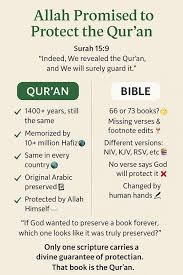
> “Indeed, We have sent down the Reminder [the Qur’an], and indeed, We will surely guard it.”
(Surah Al-Hijr, Chapter 15, Ayat 9)
This divine promise encompasses both the text and the language of the Qur’an. By guaranteeing the preservation of His revelation, Allah (swt) has also indirectly ensured the preservation of Arabic — the vehicle of His final message.
The Protection of Arabic Language through the Qur’an
Before the revelation of the Qur’an, Arabic was confined largely to the Arabian Peninsula. Yet through Islam, it became a global language — the sacred tongue of more than two billion Muslims today. Every Muslim, regardless of nationality or ethnicity, recites Arabic verses of the Qur’an in daily prayers.
This universal and unbroken recitation has made Arabic the most memorized and orally transmitted language in human history. Millions of Huffaz (memorizers) safeguard the Qur’an word for word in their hearts across continents. Even if every printed copy of the Qur’an vanished, it could be rewritten from memory within days — a phenomenon unparalleled in any other religion or language.
Through this divine system of memorization and recitation, the Qur’an protects Arabic, and the Arabic language, in turn, preserves the Qur’an. Thus, Allah’s promise of safeguarding His Book has inherently included the preservation of its linguistic medium — along with its recitation and meaning.
The Qur’an explains:
“Indeed, We have sent it down as an Arabic Qur’an so that you may understand.”
(Surah Yusuf, Chapter 12, Ayat 2)
This verse unequivocally asserts that the Qur’an’s miraculous nature — its i‘jaz — resides in its very language: in its rhythm, phonetic harmony, structure, and unsurpassed eloquence. When translated, one may convey an approximation of its meanings, but the divine composition — the essence of the miracle — is inevitably lost.
It was precisely the alteration of meanings and translations into other languages that led to distortions in the earlier Divine Scriptures, ultimately causing the extinction of some original texts along with their revealed tongues. Therefore, the Qur’an cannot and must not be separated from its original language or its distinctive mode of recitation under any circumstance — not even for the purpose of spreading its message. The message of the Qur’an must reach people only in the manner decreed by its Owner — Allah (swt) — as it was revealed to His final Messenger, Prophet Muhammad (saws).
Conclusion
From the Vedas and Avesta to the Torah, Gospel, and Tripitaka, every ancient scripture has either lost its original language, undergone human modification, or exists only in translations. Only the Glorious Qur’an remains as it was revealed — in the exact words and sound of its revelation.

Producing it without the Arabic text is not merely a technical error; it is a violation of divine sanctity. The Qur’an is Allah’s direct speech in Arabic — not its translation. The translations are human approximations meant to assist understanding, never to replace the original revelation.
Therefore, the Qur’an without Arabic text should never be produced, for it would cease to be the Qur’an. Its divine challenge, its linguistic miracle, and its eternal protection all testify that the Glorious Qur’an is the Living Word of Allah, preserved in the heart of Arabic until the very end of time.
You May Also Like
 Qur'anic Wisdom
“…so that it (wealth) may not circulate only between the rich among you...”
“…so that it (wealth) may not circulate only between the rich among you...” [Part...
 Qur'anic Wisdom
“And do not bestow favor to acquire more”
“And do not bestow favor to acquire more” [Part/ Juz 29 — From Surah...
 Qur'anic Wisdom
“I Have not Created Jinn and Mankind Except to Worship Me.”
“I Have not Created Jinn and Mankind Except to Worship Me.” [Part /Juz'-27 from...
 Mufti Jaseemuddin Qasmi
“If A Sinful Person Brings You a News, Investigate…”
“If A Sinful Person Brings You a News, Investigate…” (Part /Juz - 26 from...
 Qur'anic Wisdom
“Whoever Desires the Harvest of the Hereafter, We will Increase for him his Harvest…”
“Whoever Desires the Harvest of the Hereafter, We will Increase for him his Harvest…”...
 Islam
Islam“Good and evil are not equal. Repel evil deed by that deed which is better”
By Mufti Jaseemuddin Qasmi Coordinator Online Darul Ifta & Lecturer at MMERC, Mumbai [Part...
Comments (0)
Leave a Comment